

A comparison of Accord and Seismic content management systems and capabilities.
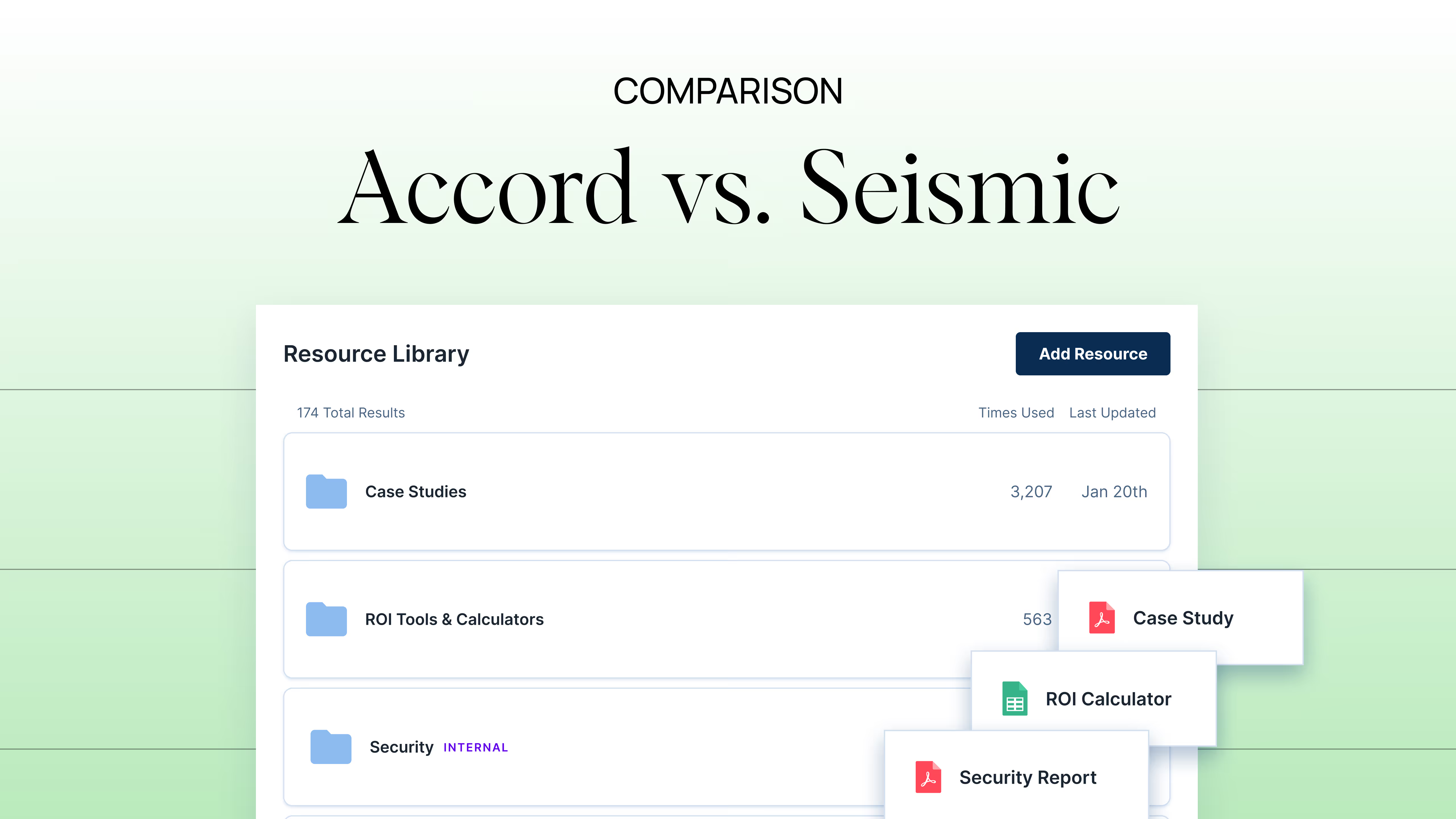
Sales and marketing teams invest heavily in creating compelling content—case studies, competitive battle cards, ROI calculators, and security documentation. But here's the problem: most of it never gets used.
Traditional content management systems like Seismic store your sales content in separate repositories that reps have to remember to check. Accord CMS takes a fundamentally different approach by embedding content directly into your sales workflow.
Let's break down how these platforms compare and when each makes sense for your team.
Seismic positions itself as a leading sales enablement platform that empowers customer-facing teams with tools for content management, training, and insights. It's designed to help organizations centralize their sales materials and track content performance across the sales organization.
Before diving into Accord CMS specifically, it's important to understand what Accord does differently.
Accord is an AI-Powered Revenue Excellence Platform that transforms your sales processes and methodologies into enforceable playbooks where deals actually get done. For example, instead of documenting your methodology in slides or PDFs, Accord makes those methodologies—MEDDPICC, SPICED, BANT—playbook steps that are tracked and scored against completion and quality.
Think of it this way: traditional enablement gives reps a process to follow. Accord makes following that process the easiest path forward by building it into their daily workflow.
Here's how it works:
Accord CMS is the content management layer built directly into the Accord platform. Rather than treating sales content as a separate destination that reps visit when they remember, Accord embeds marketing-approved resources directly into playbook steps.
When a rep opens their discovery playbook, the relevant case studies are already there. When they reach the security review stage, compliance documentation automatically surfaces. When it's time to build a business case, the ROI calculator is embedded right in that step.
This is what we mean by "just-in-time content delivery." The right resource appears at exactly the right moment in the sales process—no searching, no remembering what exists, no context-switching between tools.
Seismic's Approach: Content lives in a dedicated platform that reps visit when they need to find something. Think of it as a well-organized library—great if reps remember to visit and know what they're looking for.
Accord's Approach: Content is woven into the fabric of how reps work. Because Accord playbooks are the workspace where deals happen (not separate documentation about how deals should happen), embedding content directly into playbook steps means reps encounter it naturally as part of executing the deal.
Both platforms offer:
The key difference: Seismic requires reps to search and remember what content exists. Accord surfaces content automatically based on which playbook step a rep is executing in their live deal.
Seismic provides robust analytics on content usage and engagement, helping you understand which materials get downloaded and shared most frequently.
Accord CMS goes further by connecting content directly to pipeline impact. Because content lives inside the playbooks that structure every deal, you can see:
Here's where the platforms diverge most significantly:
Seismic offers workflow templates and stage gates, with content attached at the overall workflow level rather than individual steps. Their "Sales Process Automation" provides structure, but content still lives separately and gets referenced rather than embedded.
Accord makes playbooks the primary workspace where sales happens—and content is embedded directly into each step. When a rep opens their deal, they're working inside a playbook. Each step contains:
Content becomes unavoidable and contextual rather than optional and separate. Reps don't switch between "the playbook tool" and "the content tool"—everything exists in one workspace.
Here's another key advantage: Accord playbooks can be shared directly with customers as mutual action plans.
This means when you embed a case study into your "Business Case Development" playbook step, that resource can be automatically shared with your buyer as part of the collaborative plan you're building together. No extra steps, no separate emails—just seamless content delivery in context.
Your buyer sees the exact resources they need, when they need them, as part of the shared roadmap to close.
Seismic makes sense when you need:
Seismic excels as a traditional enablement platform with robust features for large, complex organizations that need extensive content libraries and sophisticated training programs.
Accord CMS is the better choice when you want:
Accord wins when adoption matters more than features, and when you want content usage to be automatic rather than aspirational.
Choose Seismic if you need a standalone, feature-rich enablement platform with extensive training capabilities and you're confident you can drive consistent adoption across your team through ongoing change management.
Choose Accord CMS if you want to eliminate the content graveyard problem entirely by embedding resources directly into the playbooks that structure how your team sells. When content lives where work happens, adoption becomes automatic and impact becomes measurable through actual pipeline data.
The question isn't which platform has more features. The question is: do you want content that can be used, or content that will be used?
Traditional CMS platforms like Seismic give you a place to store content and hope reps use it. Accord CMS makes the right content unavoidable by building it into the enforced workflow where sales actually happens.
For revenue teams tired of investing in materials that never see the light of day, that difference matters.
Ready to see how Accord CMS delivers content your team will actually use? Book a demo to see playbook-embedded content in action and learn how customers are achieving 40% bigger deals with Accord.


.png)
.png)
.png)