

A comparison of best practice enforcement and task management
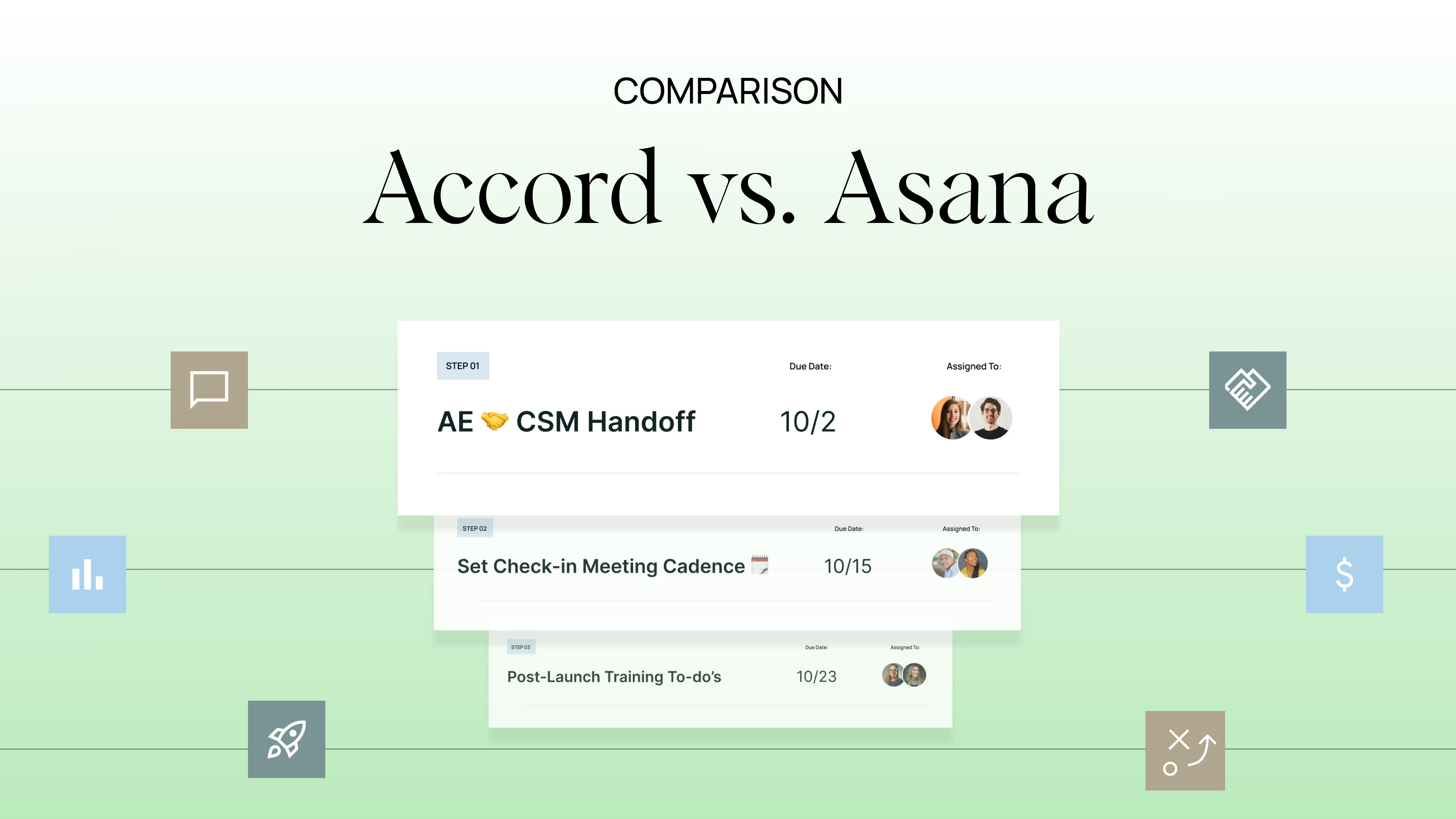
Your customer success team has built implementation templates in Asana. Clear phases, organized tasks, due dates for everything. From kickoff through training to go-live, every step is documented and assigned.
But documentation isn't execution. And task lists aren't success plans.
Here's what actually happens: implementations start strong, then customers stop checking Asana. Your CSMs chase updates through email. Critical steps get skipped when timelines compress. The template exists, but each CSM interprets it differently.
Asana is an excellent task management platform—but managing tasks isn't the same as driving outcomes. Accord enforces the onboarding best practices that makes implementations successful.
Let's break down how these platforms compare and when each makes sense.
Asana positions itself as the work management platform teams use to stay focused on the goals, projects, and daily tasks that grow business. It's designed to help teams organize work, collaborate, and hit deadlines through clear task structures, timeline views, and project templates.
Asana excels at helping your internal CS team track what needs to happen across all active implementations with timeline views, workload management, and progress reporting.
Accord is an AI-Powered Revenue Excellence Platform that transforms your implementation and onboarding processes into enforceable playbooks where customer onboarding actually happens.
Instead of documenting your implementation process in slides or project plans, Accord transforms kickoff steps, technical setup, training milestones, and go-live criteria into collaborative playbook steps that are tracked and completed in collaboration with customers, and scored against quality.
Here's how it works:
Asana's approach: Create project templates with tasks, subtasks, and dependencies. Assign them to your team and customers. Track completion. Hope everyone interprets the template correctly and actually completes each step with quality.
Accord's approach: Turn your onboarding process into the workspace itself. CSMs can't mark "stakeholder mapping" complete without actually mapping stakeholders. Training steps require documented completion. Success criteria must be defined upfront. The platform enforces your standards, not just tracks whether boxes got checked.
Both platforms offer:
The enforcement difference: Asana tracks whether tasks are marked complete. Accord ensures tasks are completed correctly by requiring specific information capture, stakeholder identification, and success criteria definition before steps can be closed.
Asana allows you to invite customers as project members where they can see tasks, comment, and mark items complete. They're participating in your task list.
Accord creates a mutual action plan—a collaborative workspace designed for partnership. Customers see:
The experience feels like a joint success plan, not like being assigned tasks in someone else's project.
Asana's automation can assign tasks when projects start, send reminders when due dates approach, and move tasks between sections automatically.
Accord's playbooks enforce quality standards:
You're not hoping CSMs follow best practices. You're making best practices the default workflow.
Asana provides portfolio views showing your team which implementations are on track, at risk, or behind schedule based on due dates and task completion.
Accord creates mutual visibility with shared accountability:
You're not just tracking tasks—you're partnering on success with full transparency.
Asana shows timeline data: how long implementations take, which CSMs have the most overdue tasks, completion rates by project phase.
Accord connects execution to revenue outcomes:
You're optimizing for revenue impact, not project timelines.
Asana allows you to attach files to tasks and projects. CSMs need to remember what to share and when, then upload or link to resources.
Accord embeds resources directly into playbook steps. When a CSM reaches "Technical Setup," the integration guide is already there. When customers need training documentation, it appears automatically in that step. Resources are unavoidable.
Asana makes sense when you need:
Asana excels as a general-purpose work management platform for teams that need flexibility and are comfortable with process being optional.
Accord is the better choice when you want:
Accord wins when consistency matters, when customer experience is critical, and when you need to connect implementation quality to success outcomes.
Choose Asana if you need general-purpose task management across your organization and you're comfortable with implementation processes being a template that CSMs should follow (but can interpret differently).
Choose Accord if you want to give every CSM on your team the structure and support that makes great implementations possible. When your best outcomes come from what top performers naturally do, Accord captures that expertise and makes it the default workflow. Every CSM has the playbook, resources, and guardrails they need to deliver excellent implementations consistently.
Ready to see how Accord enforces implementation excellence? Book a demo to see implementation playbooks in action.


%20(1).png)
.png)
.png)