

A comparison of Accord and digital sales room platforms like Trumpet, Dock, and Aligned.
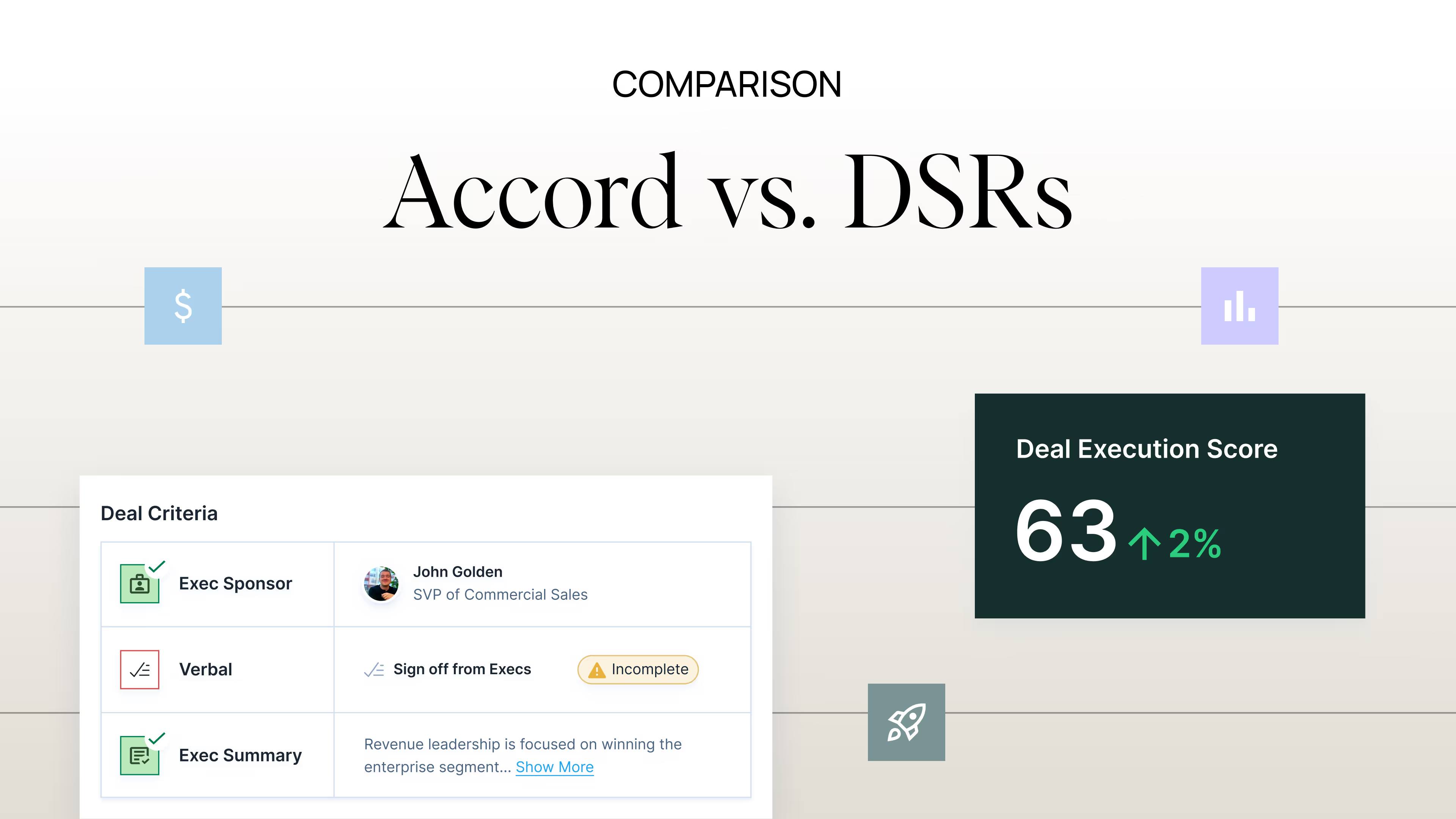
Digital sales rooms promised to revolutionize B2B sales. No more scattered emails, lost attachments, or version control chaos. Instead: beautiful, branded workspaces where buyers and sellers collaborate in one place.
Platforms like Trumpet, Dock, and Aligned delivered on that promise, creating engaging digital experiences with mutual action plans, stakeholder tracking, and content libraries that make everything accessible and trackable.
However, better presentation doesn't guarantee better execution.
A rep can create a stunning Trumpet pod with personalized videos and beautiful layouts and still skip discovery. They can build a Dock workspace with mutual action plans and still fail to map stakeholders properly. They can track engagement across buying committees in Aligned and still never build a champion or understand the decision process.
Digital sales rooms solved the presentation problem. Accord solves the execution problem.
Let's break down how these approaches differ and when each makes sense for your team.
Digital sales rooms (DSRs) are collaborative digital workspaces where buyers and sellers can access resources, track progress, and engage throughout the sales process. Different platforms emphasize different aspects:
All of them excel at creating better buyer experiences than email threads and scattered documents. That's meaningful progress.
Accord is an AI-Powered Revenue Excellence Platform that transforms your sales processes and methodologies into enforceable playbooks where deals actually get done.
Accord includes the collaborative workspace capabilities of DSRs: mutual action plans, stakeholder mapping, content sharing, engagement tracking. But it goes further by enforcing how deals are executed within that workspace.
Instead of creating a beautiful stage where anything can happen, Accord scripts the entire performance, ensuring reps follow your proven best practices methodology from discovery through close.
Here's how it works:
DSR approach: Create collaborative workspaces that make content look good, engagement trackable, and progress visible. How reps use these workspaces depends entirely on their individual discipline and interpretation of best practices.
Accord approach: Structure what happens in the workspace according to your proven sales methodology. Collaboration happens, but within guardrails that ensure critical steps get completed correctly.
Think of it this way:
All platforms offer:
The execution difference: DSRs create the venue. Accord creates the venue and enforces what happens there. You're not just tracking whether buyers are engaged, you're also ensuring reps executed your methodology.
DSRs (particularly Dock) pioneered shared timelines and next steps. A massive improvement over email chaos. Buyers can see what's coming, who's responsible, and track progress together.
Accord takes mutual action plans and builds them on top of enforced playbooks:
Dock created the mutual action plan. Accord perfected it by adding methodology enforcement.
Trumpet makes content look stunning. Video-first layouts, dynamic blocks, beautiful visual hierarchy. Your materials have never looked better.
Accord embeds content into execution workflow:
Trumpet optimizes for visual impact. Accord optimizes for contextual delivery at the right stage.
Aligned helps you track which stakeholders are engaging and ensures important decision-makers don't get overlooked, solving the multi-threading challenge.
Accord enforces stakeholder mapping as a required methodology step:
Aligned shows you who clicked. Accord ensures you're engaging them strategically.
Here's where the fundamental difference becomes clear:
DSRs don't enforce process. You can create templates and suggest workflows, but:
Accord makes methodology unavoidable:
DSRs provide engagement analytics:
Accord connects execution to outcomes:
DSRs tell you what buyers did. Accord tells you what reps did, and how it impacted the deal.
DSRs provide templates and tools, but execution varies by rep:
Accord makes every rep execute like your best rep:
DSRs make sense when you need:
DSRs excel when your reps already execute well and you just need better presentation, collaboration tools, and engagement tracking.
Accord is the better choice when you want:
Choose Digital Sales Rooms (Trumpet, Dock, Aligned) if your primary challenge is buyer experience and presentation—you need better collaboration tools, stunning visuals, and engagement tracking, and you're confident your reps consistently execute well.
Choose Accord if your primary challenge is seller execution. Your reps aren't consistently following your methodology, and you want to eliminate performance variability by making excellence the default, not the exception.
Beautiful workspaces don't close deals. Excellent execution does.
For sales leaders ready to make President's Club performance the standard across their entire team—not just among a talented few—that difference is everything.
Digital sales rooms give you a better stage. Accord gives you the entire playbook and makes sure it gets followed.
Ready to see how Accord enforces sales excellence? Book a demo to see methodology-driven playbooks in action and learn how customers are achieving 40% bigger deals with Accord.


%20(1).png)
.png)
.png)