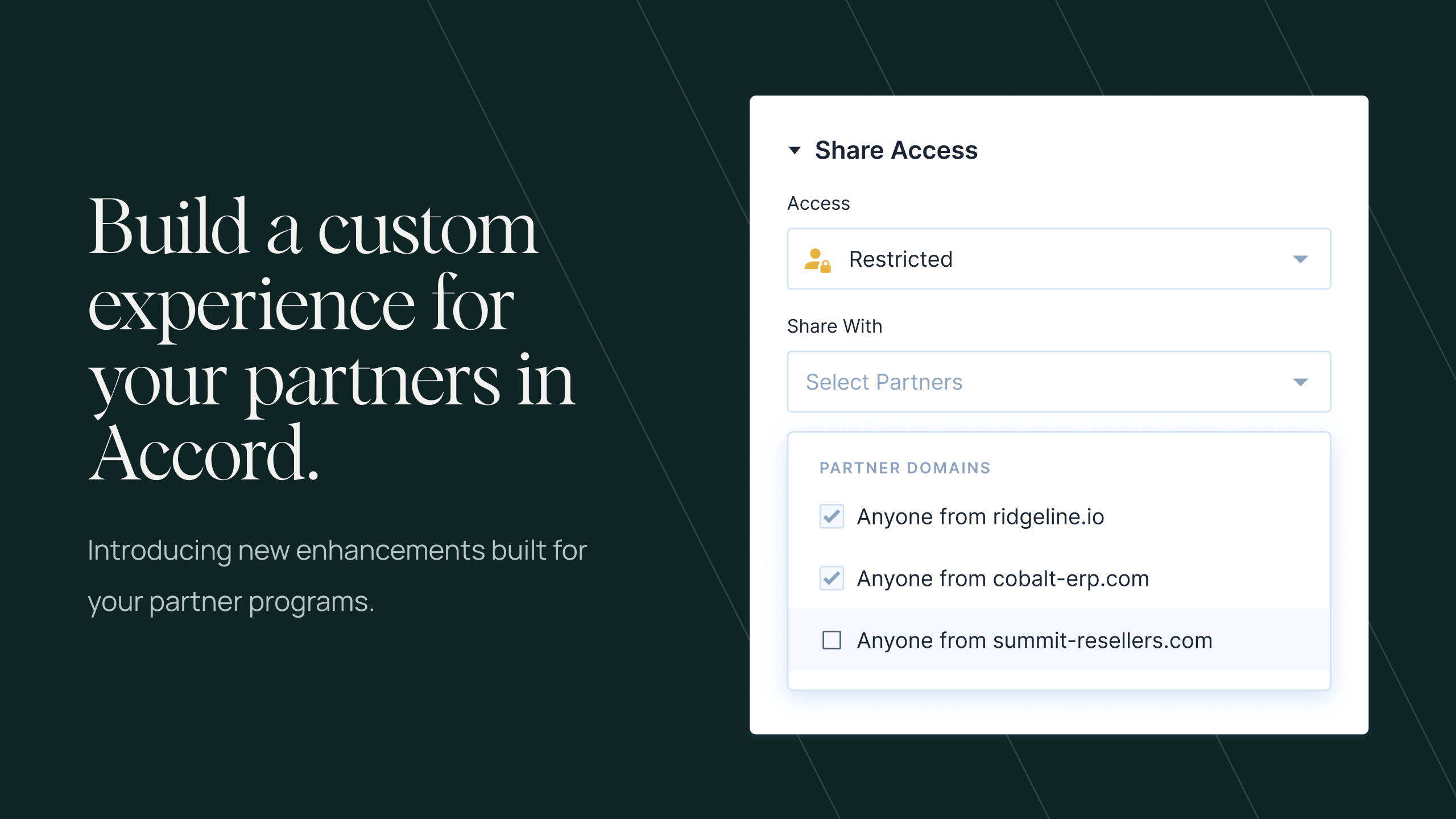
Compare the 7 best mutual action plan software tools for 2027, including Accord, Dock and GetAccept, with what each one is best for and how to choose.
Mutual action plan (MAP) software gives buyers and sellers one shared plan for closing a deal, with milestones, owners and deadlines in one place. The top mutual action plan software tools in 2027 are Accord, Dock, Aligned, Trumpet, Flowla, GetAccept and Outreach Success Plans.
Chances are, your organization is no stranger to stalled deals. According to Forrester's State of Business Buying 2024 report, 86% of B2B purchases stall during the buying process. And it's not getting easier: Forrester's 2026 report found the typical buying decision now involves 13 internal stakeholders and nine external influencers. Buying committees are larger, procurement processes are stricter and deal cycles are getting longer and longer.
But, those factors are only part of the story. In reality, many deals stall because teams lose alignment along the way. Research shows that roughly 40% of stalled deals are the result of internal misalignment within the buying committee: stakeholders who aren’t aligned on priorities, timelines, budget, or next steps.
This is exactly where mutual action plans (MAPs) come in. A mutual action plan creates a shared roadmap between buyer and seller, clearly outlining milestones, tasks, owners, and deadlines so every stakeholder understands what needs to happen and when.
Which is why in this article, we’ll cover:
And we promise to do our best to not bore you in the process. Ready to dive in?
A mutual action plan is a shared plan created by the buyer and seller. It outlines what needs to happen for a deal to close.
Rather than relying on scattered emails, verbal agreements, or a rep’s internal notes, a sales mutual action plan documents the key milestones required to get from evaluation to purchase. Think of it as a shared project plan for the deal.
Typically, a mutual action plan includes:
The reason it’s called “mutual” is because both sides participate. The buyer commits to internal actions like stakeholder reviews, legal approvals, or procurement steps, while the seller commits to deliverables such as demos, pricing documentation, or security questionnaires.
Other terms for mutual action plans include:
These terms are often used interchangeably and serve the same purpose: to create a clear, shared path forward to closing a deal.
Sales teams need mutual action plan software because complex B2B deals involve too many people, steps and moving dates to track in a static document. MAP software gives buyers and sellers one live plan, shows who is engaged, and keeps deal progress visible to sales leaders.
At this point, you might be thinking, “Can’t we just manage mutual action plans in a spreadsheet?”
Technically… yes.
But you can also run a marathon in flip-flops. Does that mean you should? Or that it’s the best strategy?
Most B2B deals involve six to 10+ decision makers, multiple rounds of internal alignment, procurement reviews, legal approvals, security checks, and budget sign-offs. Meanwhile timelines shift, priorities change, and someone inevitably goes on vacation right when you need a signature.
Now layer on the dozens of micro-decisions happening behind the scenes.
Trying to manage all of that inside a static spreadsheet is like building a puzzle where pieces keep disappearing. Eventually you stop asking “When will we finish?” and start wondering “Are we even building the right picture?”
That’s why more organizations are adopting mutual action plan software.
These tools are designed specifically for complex B2B deals. They create a shared workspace where buyers and sellers can collaborate in real time, track progress, and stay aligned on what needs to happen next.
One of the biggest advantages of mutual action plan software is that it offers:
Instead of chasing updates across email threads, Slack messages, and version 17 of the same spreadsheet, everyone works from the same plan: one place where the entire deal actually lives.
Intuition is a powerful tool. It’s great for things like reading the room on a discovery call or deciding when to push a little harder in a negotiation. But when it comes to sales forecasting, data matters. Otherwise, no matter how good a deal looks on paper, there’s no real way to validate whether it’s actually moving forward.
That’s where mutual action plans shine. MAPs replace guesswork with signals, such as tracking buyer progress on specific tasks so sales leaders and reps can see:
And that visibility matters because buyers usually decide on their preferred vendors earlier than sellers realize. Research shows that 95% of the time, the vendor that ultimately wins was already on the buyer’s initial shortlist before the first conversation even happens. In fact, the vendor buyers favor before engaging with sales still wins the majority of deals.
Two trends are accelerating this behavior:
The bottom line? Sellers need clear signals about buyer progress and engagement, not just optimistic or hopeful updates.
Deals rarely stall because someone explicitly says no. More often, they stall because nobody knows what happens next.
A mutual action plan eliminates that ambiguity by clearly outlining the path forward.
Both sides understand:
That shared clarity helps deals move forward faster and reduces the number of opportunities drifting into the dreaded “maybe next quarter” category.
For sales managers, one of the hardest parts of coaching is figuring out where a deal is actually stuck. Without clear visibility, coaching conversations often turn into eye-rolling questions like, “Have you followed up?”, “Did you send them another email?”, or “Can you check in again?” Questions that rarely help move the deal forward.
With mutual action plan software, managers can see precisely where the deal has stalled. For example, maybe procurement hasn’t been engaged or the economic buyer hasn’t reviewed the proposal, or perhaps legal is waiting on security documentation.
Whatever the case, MAPs give sales leaders the context they need to tailor coaching to each account. Instead of generic advice, managers can help reps remove the exact blocker slowing the deal down, which makes coaching more effective and keeps opportunities moving forward.
Spreadsheets fail for mutual action plans because they can't keep up once a deal grows. They don't show buyer engagement, versions multiply, every update is manual, and nothing syncs back to your CRM.
To be fair, many teams start managing mutual action plans using spreadsheets or shared documents. And at first, it does work because early in the process, when there are only a few stakeholders involved and the deal timeline is relatively simple, a spreadsheet can feel like a perfectly reasonable way to track next steps.
The problem is that B2B deals rarely stay simple for long. As more stakeholders get involved and timelines shift, spreadsheets start to show their limits. Updates get missed. Ownership becomes unclear. And suddenly the “single source of truth” exists in five different email threads. Yikes!
Here’s where things usually break down:
Eventually, most teams realize that spreadsheets have their limits, and they need more out of their mutual action plan process.
The best mutual action plan software for your team depends on your CRM, your sales methodology and what buyer experience you aim to provide. The table below compares all 7 at a glance, followed by a closer look at each one.
The good news is the category has grown quickly in the past few years. What started as a handful of niche tools has evolved into a full ecosystem of platforms designed to help sellers collaborate with buyers, track deal progress, and keep complex opportunities moving forward.
Some tools focus primarily on mutual action plans. Others combine MAPs with digital sales rooms, buyer engagement analytics, or revenue execution platforms.
Here are the 7 best mutual action plan software tools:
Accord is an agentic revenue execution platform that automates your sales process within a collaborative, buyer-facing workspace. Instead of treating mutual action plans like another document floating around the deal, Accord embeds them directly into the way your team sells. MAPs live right alongside the deal itself, where reps are already working.
Accord's AI agents read live deal signals from calls, emails and CRM activity to keep each plan current. They update the mutual action plan, map new stakeholders and suggest the next step, so leaders can see whether deals are really progressing or just looking good in the pipeline.
Accord is best for organizations that want to operationalize their sales process, enforce a value-selling methodology like MEDDPICC or SPICED, and bring structure to complex deals.
Accord’s standout feature: AI agents, governed by your playbooks, that keep every mutual action plan up to date and push the right next step to reps and buyers.
Freshworks' enterprise sales team started out running mutual action plans in spreadsheets, which made it hard to collaborate with customers quickly. With Accord, they now build each plan backward from the customer's strategic goals, like an IPO or a compliance deadline, and the rollout has grown to more than 200 internal users. As Brogan Taylor, VP of Enterprise and Strategic Sales, puts it: "Accord creates dual accountability, which keeps both sides aligned on key business milestones." Read how Freshworks became a strategic partner to enterprise prospects.
Want a head start? Based on conversations with hundreds of sales leaders, we built a free Mutual Action Plan template that you can use to partner with your buyers.
Dock approaches mutual action plans from the buyer’s perspective. Instead of sending a pile of documents and hoping stakeholders review them, Dock creates a clean, shared workspace where buyers can access everything related to the deal.
Reps can build collaborative action plans, share resources, and keep stakeholders aligned without forcing buyers to dig through emails or attachments.
Dock is best for teams that care deeply about buyer experience and want a polished, easy-to-navigate environment for deal collaboration.
Dock’s standout feature: Template-based mutual action plans inside a clean digital sales room, with AI that can draft the whole room.
Aligned blends digital sales rooms with mutual action plan functionality, creating a single place where buyers can review information and track deal progress.
Instead of bouncing between shared docs, email threads, and content folders, sellers can organize resources, milestones, and communication inside one structured workspace.
Aligned is best for teams that want to combine content management and deal collaboration in one tool.
Aligned’s standout feature: Built-in digital sales rooms paired with collaborative action plans.
A European-based digital sales room with personalized buyer experiences and built-in mutual action plans, Trumpet takes a different approach to deal collaboration.
Instead of sending buyers a mix of links, decks, and documents, Trumpet turns every deal into its own personalized buyer portal. Think of it like a microsite for the deal where stakeholders can review information, track progress, and collaborate on next steps with the sales team.
Trumpet is best for organizations that want highly customized buyer experiences and visually polished deal environments.
Trumpet’s standout feature: Personalized deal microsites designed for each account.
Flowla focuses heavily on visual buyer journeys. Instead of presenting action plans as static task lists, Flowla organizes deal steps into interactive workflows that guide buyers through the purchase process.
The platform is designed to make collaboration feel intuitive and structured, helping both sides understand exactly what happens next. It’s best for teams that prioritize design and user experience in their deal collaboration tools.
Flowla’s standout feature: Flow-based mutual action plans that visually guide buyers through the deal.
GetAccept expands beyond mutual action plans by combining deal collaboration with document workflows and e-signatures.
Sales teams can manage proposals, contracts, and deal communication in the same workspace where they’re tracking mutual action plans.
That means fewer tools and fewer handoffs during the closing process.
GetAccept is best for organizations that want document management and deal execution in one platform.
GetAccept’s standout feature: Integrated proposals, contracts, and e-signatures alongside MAPs.
Outreach Success Plans bring mutual action plan functionality directly into the Outreach sales execution platform. For teams already using Outreach to manage sequences and pipeline activity, this means they can track deal progress without introducing another tool into the stack.
Outreach Success Plans are best for organizations that already rely heavily on Outreach and want MAP functionality built into their existing workflow.
Outreach Success Plans’ standout feature: Mutual action plans embedded directly into the Outreach platform.
The most important features of mutual action plan software are collaborative task tracking, buyer engagement analytics, CRM integration, stakeholder mapping, content delivery, sales methodology enforcement and AI agents that keep the plan up to date.
Not all mutual action plan software is created equal. Some tools act as upgraded spreadsheets that still require manual inputs, while others are built to support the entire deal execution process. The difference matters, especially when you’re managing complex opportunities with multiple stakeholders and moving timelines.
Here's what each capability looks like in practice:
A mutual action plan is all about coordination. That means the best tools allow both sellers and buyers to assign tasks, set deadlines, and track completion in real time. This way, everyone can see exactly what needs to happen next and who owns it.
One of the biggest advantages of modern mutual action plan software is visibility into buyer behavior.
Rather than wondering whether stakeholders reviewed the plan, reps can see signals like:
These insights help sellers prioritize follow ups and identify potential risks earlier in the deal cycle.
A mutual action plan should live inside the sales workflow, not outside of it. Strong MAP platforms integrate directly with systems like Salesforce and HubSpot, ensuring deal activity automatically syncs with the CRM.
Without this integration, reps often end up duplicating work and leadership loses visibility into what’s happening across the pipeline.
With six to 10+ decision makers involved in most B2B deals, MAP tools help teams map the entire buying committee, including decision makers, influencers, champions, and procurement contacts.
By tracking who’s involved and how engaged they are, sellers can identify gaps early and avoid the classic surprise of discovering a new stakeholder late in the process.
Buyers need more than a timeline, they also need relevant information including case studies, ROI calculations, security documentation, and implementation plans.
The best MAP platforms allow sellers to embed resources such as these directly inside the plan, which keeps everything buyers need in one place instead of scattered across multiple links and attachments.
Many revenue teams rely on frameworks like MEDDPICC or SPICED to qualify and advance deals. Advanced MAP tools can reinforce these frameworks by embedding key steps and qualification criteria directly into the deal workflow.
This helps ensure reps consistently follow the process instead of improvising their way through complex opportunities.
A mutual action plan is only useful if it reflects what's actually happening in the deal. The newest MAP software uses AI agents to do the upkeep reps usually skip. Agents read calls, emails and CRM activity, then update milestones, flag new stakeholders, draft follow-ups and suggest the next step.
Look for agents that follow your playbook and keep a human in the loop. Reps should review what the agent proposes before anything reaches a buyer or the CRM. That way the plan stays current without reps losing control of the deal.
To choose the right mutual action plan software, look at five things: buyer collaboration, deal context, CRM integration, fit with your sales methodology and AI agents. Ask these questions during your evaluation:
A mutual action plan works best when the buyer helps build it and both sides update it as the deal moves. Here's how to set one up:
In Accord, the mutual action plan sits inside the deal playbook and AI agents update it after every call, so reps and buyers work from the same steps and managers can see where a deal is stuck.
Deals usually fall apart or stall because alignment disappears somewhere along the sales process. And that’s exactly the problem mutual action plans are designed to solve.
The right mutual action plan software helps sales teams keep buyers aligned, spot deal risks earlier, and bring structure to complex opportunities. Whether you prioritize buyer experience, CRM visibility, or enforcing your sales methodology, there’s a MAP tool built to support the way your team sells.
Remember, closing deals isn’t just about convincing buyers to choose your solution. It’s about helping them navigate the buying process without everything falling apart. And that’s a lot easier when everyone is working from the same plan.