In this episode, Ross and Matt discuss why it’s important to develops reps one skill at a time.
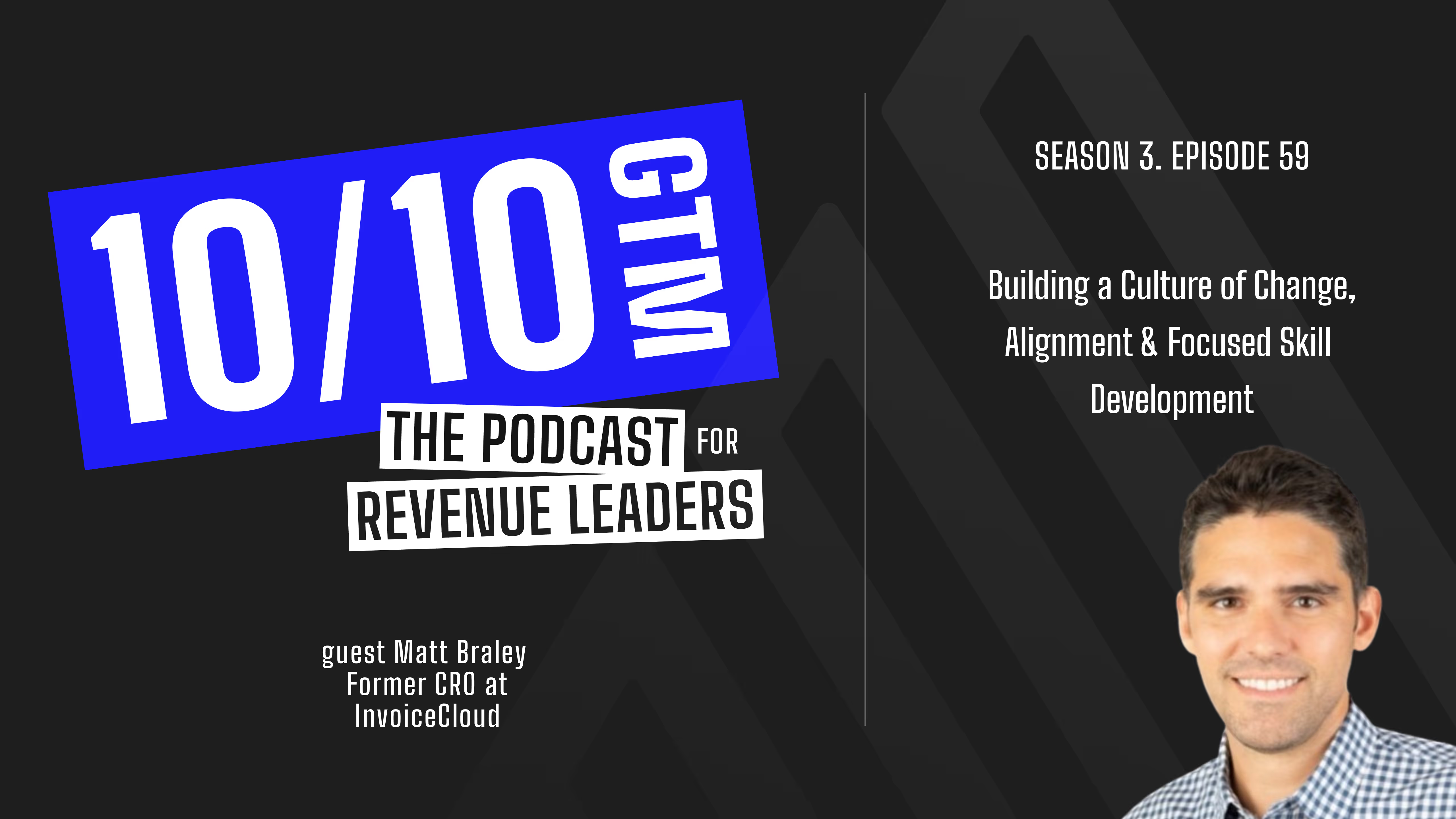
Welcome to Season 3 of 10/10 GTM: The Podcast for Revenue Leaders!
Our guest for Episode 59 is Matt Braley, former CRO, InvoiceCloud. Rising through the ranks from AE to CRO, Matt spent over a decade with InvoiceCloud, driving its growth from $28M to $170M in ARR and playing a key role in its $4B IPO.
In this episode, Ross and Matt discuss why it’s important to cultivate a culture that embraces change, builds strategic alliances, and develops reps one skill at a time.
Listen to the episode here, and get the key takeaways from our conversation below.
To successfully scale a company, agility is key. Building a culture that not only enables change but actively promotes it is essential. One way to create this kind of culture is by asking, “How can we build trust and engagement across the revenue organization?”
According to Matt, people seek clarity in five core areas when it comes to culture-building and understanding their role. He calls this his 'ship analogy':
“When I think about my InvoiceCloud journey from under one million ARR to $170 million, it felt like working at five different companies over those 11 years,” Matt shares. “During my four years as CRO, we went through significant transformations. We built out an SDR team and a sales engineering team, established Sales and Rev Ops, and segmented one sales role into four distinct roles. We expanded to enterprise sales, developed an inside sales team, entered two new vertical markets, and quadrupled the size of our alliance team. Along the way, we continuously evolved our tech stack and updated our core messaging twice. Ultimately, I feel really strongly that you have to have the right culture to enable that volume of change.”
"Most initiatives, as you're scaling a business, are going to take twice as long and be twice as hard as you expected," Matt explains. This insight highlights the importance of alignment at every level, particularly when launching new go-to-market strategies or building alliances.
“When you’re building a new GTM motion or adding new teams, it’s essential to align on success metrics, resource requirements, and timeline expectations with all stakeholders across the organization. Only proceed once you have full buy in,” he advises. “If the CEO expects it to take four months and you know it’ll take eight or more, you’re setting up a tough conversation six months down the line.”
Everyone loves the idea of strategic alliances — they’re well-documented as growth drivers and can drastically reduce cycle times, increase deal size, improve retention, and decrease churn. However, they also require substantial commitment and patience. “In my experience, no partnership really hits its stride in less than a year,” Matt notes. “From the time you first engage, sign, and onboard a partner, it takes a tremendous effort to reach the point where they’re consistently producing leads and generating revenue.”
Matt emphasizes that successful alliances hinge on careful preparation and the right talent. “You need the right profile of person to sell to these partners, clear expectations and commitments from both sides, and alignment on the ‘how.’ Working with a market leader like Oracle, for instance, is going to look very different than working with a $50M ARR company or a laggard in the space,” he says. “Incentive programs must be well-structured for both teams, and your GTM execution needs to be consistent — internally and externally. Once an alliance is signed, the real work begins. Effective onboarding from the start is essential to avoid what I call a ‘paper partnership’ — where, six months in, both sides are disappointed because the partnership has underperformed against expectations.”
Ultimately, setting the right foundation for each initiative and alliance allows the team to navigate the challenges of scaling and turn strategic plans into growth.
You can have a great culture, strong channels, and all the right structures in place. But at the end of the day, success comes down to the people on the front line. So the real questions are: How do you upskill them, keep them motivated, and ensure they execute at their best?
To keep your sales team highly effective, focus on developing one skill at a time.
“Skill development is not a speed process,” says Matt. “It takes consistent focus. People trying to get better at four different things at once won’t move the needle anywhere near as fast as focusing heavily on one thing at a time.”
For effective skill-building, Matt recommends taking an in-depth approach: prioritize intensive training, 1:1 coaching, and regular call reviews. Encourage reps to study successful examples, such as Gong clips, so they understand what excellence looks like before moving on to the next skill. This focused development may take weeks or even months, depending on the skill.
Matt also advises managers to maintain a regular cadence of call and deal reviews with each rep, using data to pinpoint the single biggest area for improvement. When a skill gap is identified, the manager can sit down with the rep and set a clear goal, such as concentrating exclusively on improving CIO and CTO discovery for the next month. It’s essential for managers to highlight the potential impact of mastering this skill: “If we work hard on this together,” a manager might explain, “we could reduce your time in the technical review stage by 20 to 30 days, speed up security reviews by 50%, or shorten the contract-to-go-live process by 20 days.”
Setting tangible benchmarks, based on what the top 10% of the team is achieving, gives reps a clear sense of the results they can expect from their skill development. By building skills one at a time, sales teams don’t just improve incrementally — they achieve impactful, measurable gains that drive overall success.
Matt Braley is an innovation-focused leader with expertise in complex B2B GTM environments. A strong advocate of servant leadership, he believes that great businesses are built by investing in talent development and empowering people. After 11 successful years at InvoiceCloud, Matt now dedicates his time to advising CROs and leaders at high-growth tech companies.