In this episode, Ross and Jordan break down why role-based enablement outperforms company-wide programs and how teams can measure its real impact.
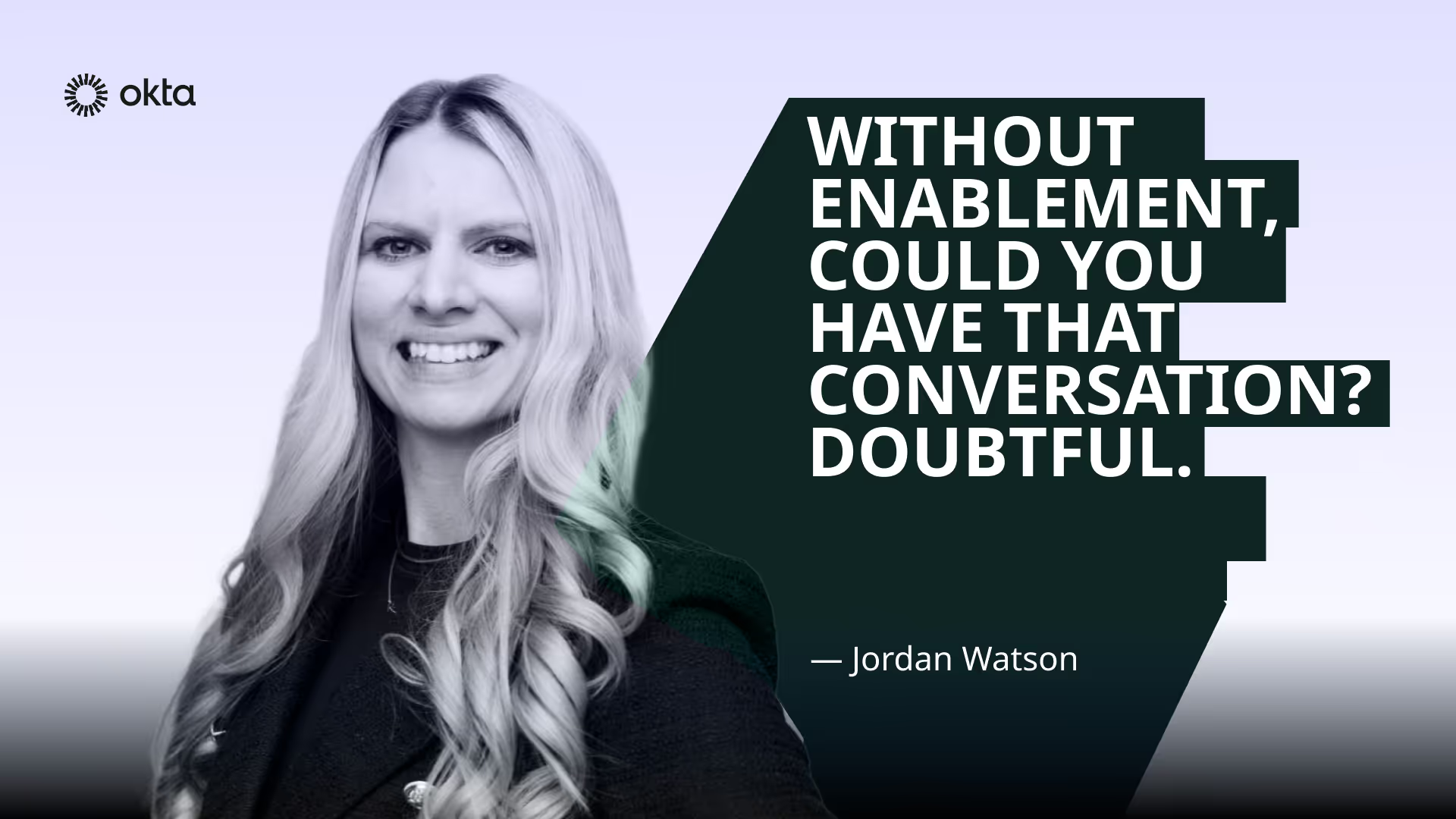
Our guest is Jordan Watson, Director of Customer First Enablement at Okta. Before joining Okta in 2024, Jordan held leadership roles at Broadcom and VMware. She brings more than a decade of sales and marketing experience to the conversation.
In this episode, Ross and Jordan break down why role-based enablement outperforms company-wide programs and how teams can measure its real impact.
Listen to the episode here, and get the key takeaways from our conversation below.
To no one’s surprise, company-wide messaging rarely resonates with everyone. That’s why role-based enablement is far more effective, especially when teams engage with customers and the product in very different ways. As Jordan explains, sales roles “aren’t going to pay attention if it’s just the sales message.” The takeaway? A one-size-fits-all approach doesn’t work.
To focus on role-based enablement, Jordan’s team starts with the core information everyone needs to know, and then immediately branches into tailored paths. A CSM, for example, receives different training than a technical support engineer because their responsibilities and conversations look nothing alike. The CSM message is focused on customer outcomes and expansion opportunities, while technical teams need deep product knowledge and troubleshooting detail.
“The advice I always give individuals when talking about enablement is to meet the team where they are. Figure out how you can impact their business and what matters to them,” stresses Jordan.
When she joined Okta a year ago, the post-sales enablement function didn’t exist. “I had to come in and give my team's commitment upfront, which was to deliver the role-based enablement. And that’s what we do. That means creating learning paths that talk about the business in their terms — adoption plays for TAMs, integration support for PS, troubleshooting and break/fix for support engineers.”
When it comes to enablement, the real challenge is proving impact — showing how better tools and smarter processes translate into numbers that matter to a CFO. At Okta, Jordan’s team achieves this by grounding her team’s success in clear, role-based metrics that tie directly to business outcomes.
“We aim to deliver role-based enablement, and part of what I metric my team on is how they’re impacting the businesses they support,” says Jordan.
Her team is measured based on two categories: leading and lagging indicators. Leading metrics (which are measured immediately) include:
“The metrics that impact the business the most are our lagging metrics. We align these metrics to every piece of the business we support. Examples include churn rate, time to resolution, and PS attach. We use these metrics to see how we’re able to move the needle and make an impact for all these post-sales roles,” explains Jordan.
Of course, lagging metrics are influenced by many factors. New leaders join, new programs launch, and major product releases hit the market. Jordan acknowledges the complexity but focuses on isolating the impact of enablement over time.
“You’ll start seeing across the industry that enablement is changing the way they talk about themselves—becoming more revenue enablement. These tech companies are switching the way they look at enablement,” she says.
Even if no single lagging metric can be attributed exclusively to an enablement program, she emphasizes that the function is essential for equipping teams to perform.
“I can’t tie one-to-one in a lot of what we do, but it is an influence number. Without enablement on a net-new product, could you go have that conversation? Doubtful. You could maybe fake it, but you’re going to need some level of enablement to show the business value.”
Jordan is the Director of Customer First Enablement at Okta, where she builds role-based programs that help post-sales teams perform at their best. She brings a strong background across sales, marketing, and GTM leadership, with previous roles at Broadcom, VMware, and Rethink CRM.
Enablement wasn’t the path she expected, but it fits her perfectly. “I always thought I’d be a doctor or a lawyer,” she says. “But I’ve always wanted to help people and enable them to be better.” She now brings this mission to every team she supports.
To learn more about Jordan or connect with her directly, follow her on LinkedIn.