In this episode, Ross and Jeff discuss what never changes in sales regardless of segment, how Carta builds a culture of consultative selling.
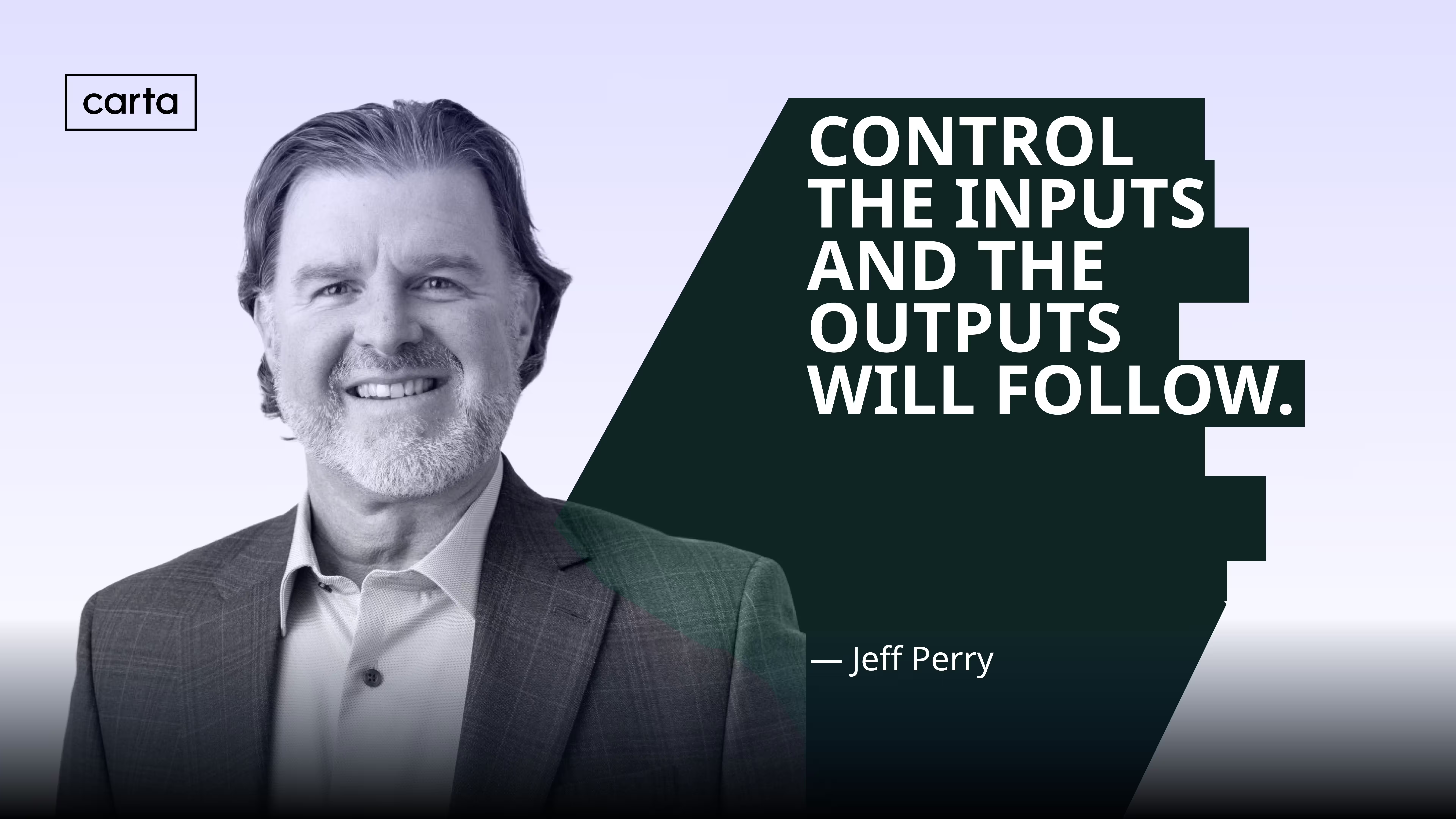
Our guest is Jeff Perry, VP Sales at Carta. Jeff leads all core software revenue and unifies the company’s GTM, Product, and Engineering functions. He previously scaled SMB and vertical sales teams at DocuSign and spent 13 years at Oracle, bringing more than 20 years of experience to the conversation.
In this episode, Ross and Jeff discuss what never changes in sales regardless of segment, how Carta builds a culture of consultative selling, and the inputs that drive consistent upmarket performance.
Listen to the episode here, and get the key takeaways from our conversation below.
Deal cycles will shift. Buying committees will grow. Products will evolve. But according to Jeff, the heart of sales remains the same: “Building a relationship and being a trusted advisor for your customer doesn’t change. Finding a pain point and adding value through that creates a better experience.”
Whether you’re in the SMB business or enterprise, Jeff stresses that top performers are the ones who can relate to people, uncover the real problem or pain, and match the appropriate solution to it.
“To me, that's the core of sales,” explains Jeff. “It’s a relationship business. And you have to build that relationship to get a seat at the table.”
The bottom line? No matter who you’re selling to, be it enterprise executives, SMB teams, or early-stage founders, success is ultimately tied to your ability to build meaningful connections.
For Jeff, a consultative sales culture starts with recognizing the two distinct sides of Carta’s business. In the SMB cap-table segment, reps often work with early-stage founders who are intelligent and driven but may not have experience running or scaling a company.
“Founders are incredibly smart people with great ideas,” Jeff says, “but many have no experience actually running or building a company.” Carta sees it as part of its role to guide them through each stage of growth and fundraising. This is why the company has expanded beyond cap tables into 409A valuations, QSBS, and tax advisory — tools that help founders understand the steps they’ll face as their companies evolve.
The enterprise fund administration motion looks very different. SMB sales can close in one or two meetings, often driven by legal referrals. Enterprise sales require longer timelines and repeated, intentional interactions.
Jeff describes this as patient selling. “That’s very different from getting introduced to a CFO where you start to build a relationship,” he says. These relationships form over a series of dinners, events, and follow-ups that allow Carta to demonstrate how its product and model stand apart.
Carta’s differentiation is central to that message. “We’re not just hiring accountants to service an account,” Jeff says. “We’re a software company at heart.” By leveraging its own general ledger, Carta brings operational efficiency and accuracy that traditional providers can’t match, something prospects learn as the relationship develops.
Across both segments, the principle is the same: understand the customer’s situation, provide clarity, and add value at each step. For Jeff’s team, consultative selling is the standard for how teams engage, whether with a first-time founder or a CFO evaluating a critical system.
Once teams understand the expectations around patient, consultative selling, the next step is focusing on the inputs that move deals forward — the things a rep can directly control, regardless of company, product, or market.
Jeff explains that this mindset shift has been critical for his teams as Carta has evolved. “The cap table business was such high volume and high velocity that we expected the other businesses to be the same. The reality is it’s not.”
In slower, more complex environments, reps can’t rely on volume. They need to rely on intentional, high-quality inputs. As Jeff puts it, “What are the things within your control that you’re doing every day in your territory or pipeline? Control the inputs, and the outputs will take care of themselves.”
So, what inputs actually move deals forward?
The first input won’t surprise anyone: meetings matter. “The silver bullet to success in sales is being busy and having meetings,” stresses Jeff.
More meetings indicate that at least one of three things is happening:
Movement equals signal. Signal equals momentum. “The more active you can be, obviously the better,” says Jeff.
Across companies, high-value interactions accelerate trust and shorten long sales cycles. Jeff calls these “small levers,” but they consistently shift deals forward.
These can include:
These high-value interactions create credibility and connection that reps can’t manufacture via digital outreach alone. “These are resources we give you,” Jeff says. “You’d better be leveraging them because we’re giving you the best opportunity to be successful.”
Top performers, across organizations fully leverage the tools available to them. Jeff sees this consistently on his teams. “Most people want to hustle and win. And they embrace all the things we have to offer to help them,” he explains.
Whether it’s:
Top reps use all of the resources at their fingertips to drive deals forward.
As Chief Revenue Officer at Carta, Jeff oversees all core software revenue and drives alignment across the company’s GTM functions. He partners closely with Product and Engineering to deliver exceptional customer experiences across Carta’s entire platform.
To learn more about Jeff or connect with him directly, follow him on LinkedIn.