In this episode, Ross and Keith discuss how to be a good partner to your Systems team.
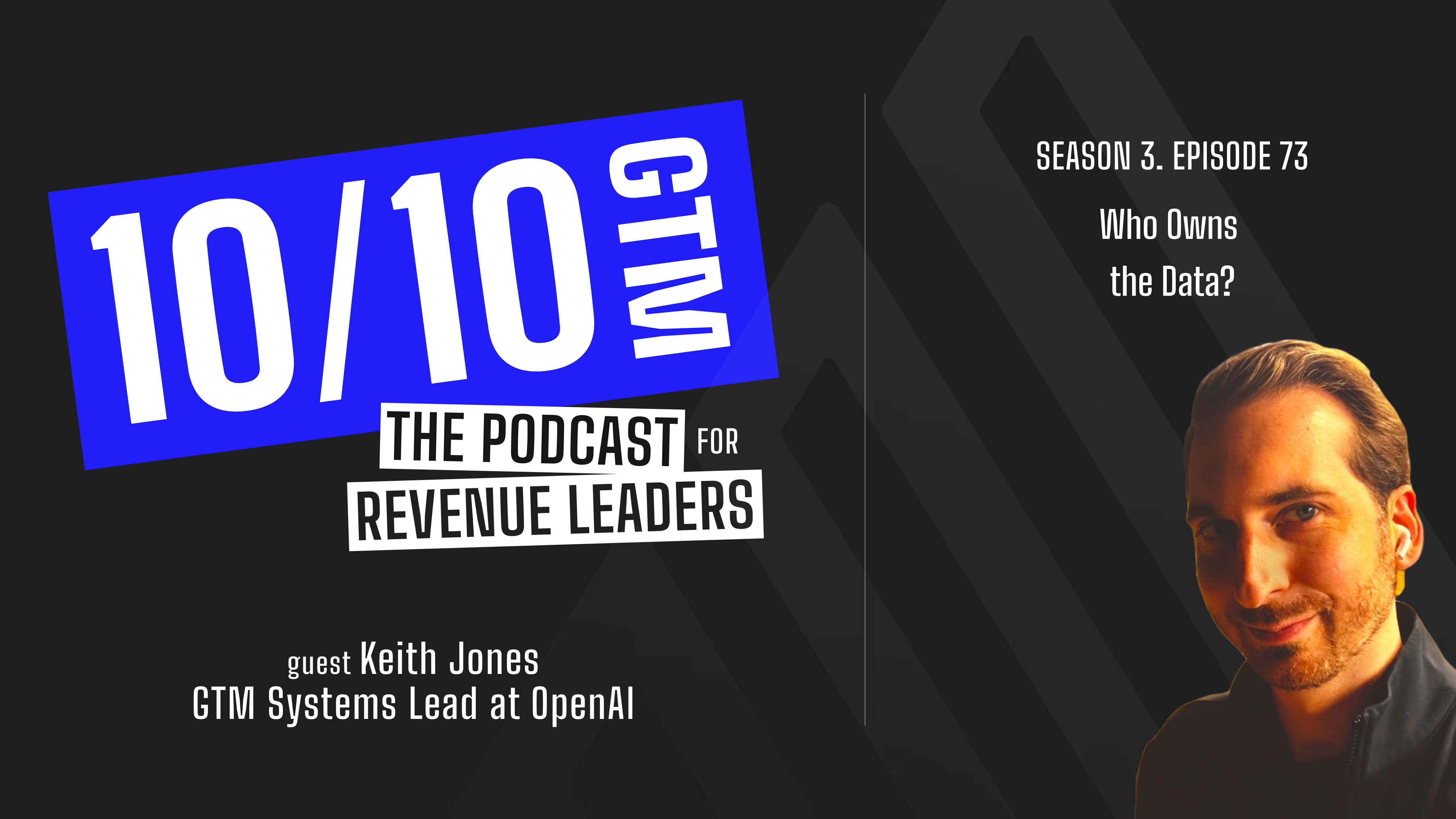
Welcome to Season 3 of 10/10 GTM: The Podcast for Revenue Leaders!
Our guest for Episode 73 is Keith Jones, GTM Systems Lead, OpenAI. Keith is a college dropout turned “professional nerd and technologist.” Prior to joining OpenAI, he held leadership roles at Gartner, MURAL, and Zenput.
In this episode, Ross and Keith discuss how to be a good partner to your Systems team, the smartest ways to evaluate and buy technology, and how to balance the demands of finance with the needs of your customers.
Listen to the episode here, and get the key takeaways from our conversation below.
Based on Keith’s experience, there are three core tenants that benefit from a productive partnership between a revenue organization and its GTM Systems team. They are:
Keith’s main takeaway? Your System’s team wants to partner with you in a way that’s impactful and mutually beneficial. “Every Systems team worth working with wants to build a lot of really cool things on behalf of their organization,” Keith says. “But they want to do it in a way that won’t require constant fixes, tweaks, or iterations because it was built hastily or haphazardly.”
To make sure you’re establishing a solid partnership, ask questions like:
This will help you find the right balance and lay a strong foundation for the relationship to evolve toward collective goals.
From Keith’s perspective, buying and using technology is a highly collaborative process. “What we do at OpenAI is put everyone involved in the evaluation of a new type of software through a brief exercise,” he explains. “We ask them to do two things — fill out a doc outlining their five must-haves and up to ten nice-to-haves about this technology. Then, I ask them to take that document, open up a screen recorder, and narrate it for me for five minutes.”
This exercise serves a dual purpose: it prompts each individual to self-edit and clarify what they actually need, while also providing richer context behind those needs. “This is where the AI comes in,” Keith continues. “I take the doc, give it to chat, and say, ‘Synthesize these things together.’ I do this for every individual in the group, giving the chat a bit of detail about each person’s role or persona. What I end up with is a list of synthesized requirements by persona, sourced from a series of individuals within each persona.”
From there, Keith instructs the AI to find overlaps in requirements. “Not everyone is a unique snowflake,” he notes. “We all have distinctive needs, but there’s going to be some overlap. Once I have X number of requirements per persona for Y personas, I want a more concise, consolidated list. Now I have a rubric by persona, and I can show each person how we’ve captured their requirements. We can score every vendor against these requirements, then aggregate those scores into a simpler set of priorities. That makes for a clear, objective decision on where we should spend more time as we move further into the evaluation.”
By combining human input with AI-driven synthesis, Keith’s method keeps everyone engaged, and makes the buying process easier because it reflects the actual needs of the users, versus just the “nice to haves,” and provides a transparent, data-driven basis for selecting the best technology.
To balance work for finance, versus the needs of the customer, Keith employs two strategies:
“One thing that’s really easy to forget, but that I’m reminded of on a regular basis, is that I have a job because this go-to-market team exists,” Keith says. “If I’m not applying some of my bandwidth to making their lives easier and their work more efficient, then I’ve missed the mark entirely. Yes, I have a responsibility to the business to build infrastructure and take big swings, but I’ve got to balance the tradeoff to some degree.”
This might look like dedicating 80% of your time to core projects and 20% to smaller-scale improvements such as cleaning up fields in Salesforce to reduce friction for individual AEs. The exact split will vary, but having a defined ratio encourages you to invest in continuous enhancements that benefit end users.
By following these steps, you can build reliable, accurate data flows that finance can trust, without overloading your GTM teams with tedious administrative tasks.
Keith is a self-proclaimed “professional nerd,” known for his penchant for GIFs and emojis. As the Head of GTM Systems at OpenAI, he leads the efforts behind its GTM Systems function. In his own words, he’s “obsessed with equipping revenue influencers with the best tech teammates that blood, sweat, tears, and cash can buy and configure.”
To learn more about Keith or follow along on his journey, connect with him on LinkedIn.